Chapter IX · Part III
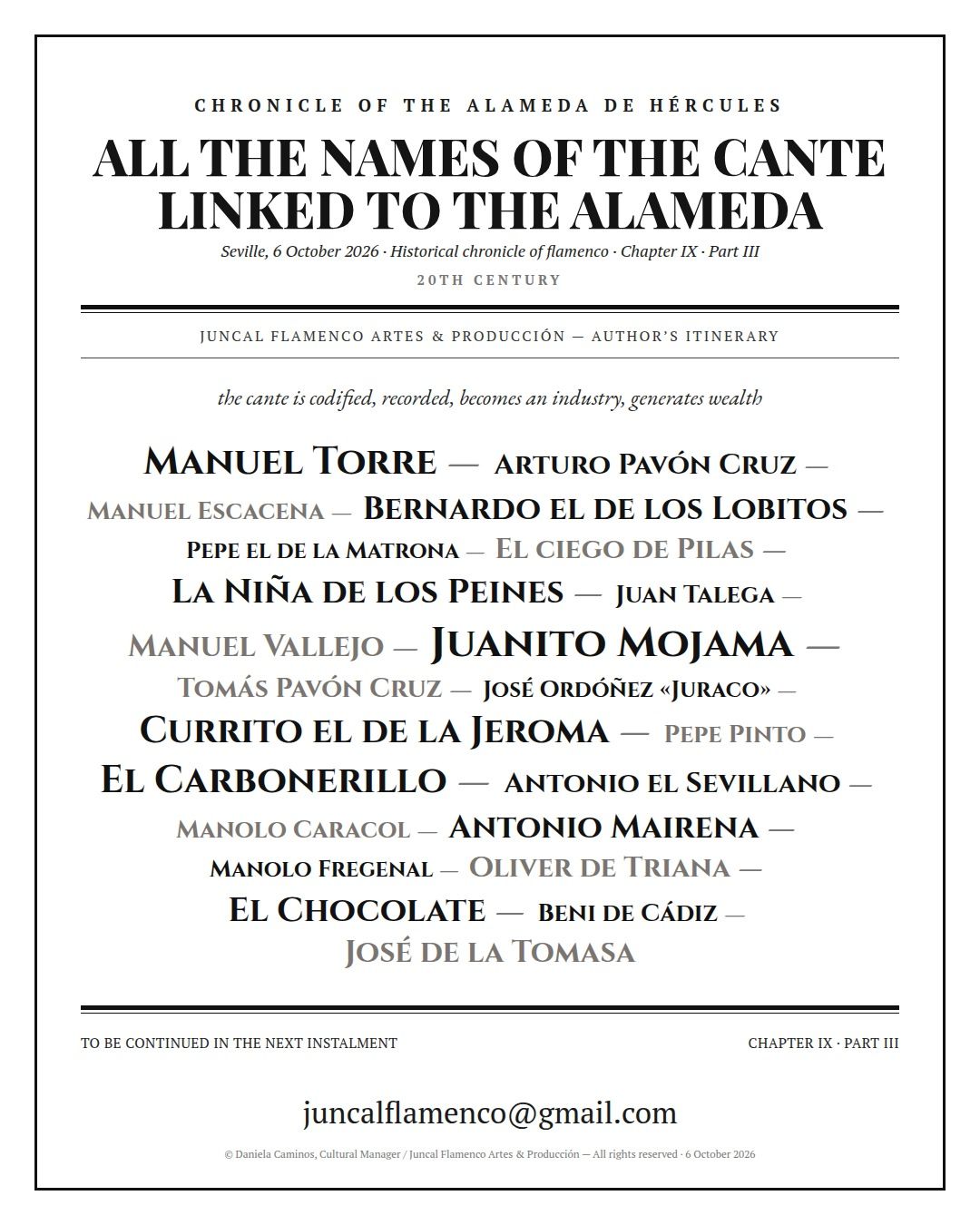
All the Names of the Cante Linked to the Alameda: 20th Century
Published on 6 October 2026
Tap the image to see it full size
How did flamenco singing become records, radio and industry in the 20th century?
We reach the 20th century, when the cante is codified, recorded and becomes an industry.
This third part opens with Manuel Torre and closes with José de la Tomasa, his great-nephew, heir to that same house of singers.
On 20 November 2026, the cantaor José de la Tomasa will bid farewell to the stage at the Ciclo de Flamenco y Mosto, organised by the Peña Cultural Flamenca La Trilla, in a grand closing of the series at the Teatro José Manuel Valderas at 9 pm. (On 17 May 2027 he returns to the Teatro Lope de Vega in Seville, looking back on the path travelled with his cante over five decades.)
May this instalment also serve as a tribute to a voice that remains a living bridge between that cante and today’s Seville.
My itinerary is a historical walk, documented thanks to so many expert authors on flamenco. I do it with respect for the artists and their families. This is my contribution to nourish memory and curiosity, so that this boundless history may open up to all those who want to know more about this bottomless well of flamenco art and artists on the Alameda de Hércules.
If you enjoyed this story, come and walk with me through the streets where it happened.
See the route © 2026 Daniela Caminos / Juncal Flamenco Artes & Producción